


What does it take for an Indian enterprise to put AI to work? Budgets and tools matter, alongside incentives, judgment, and the people willing to keep trying when an early experiment fails. This week on AI Vey, we ask two software entrepreneurs how they approach those decisions.
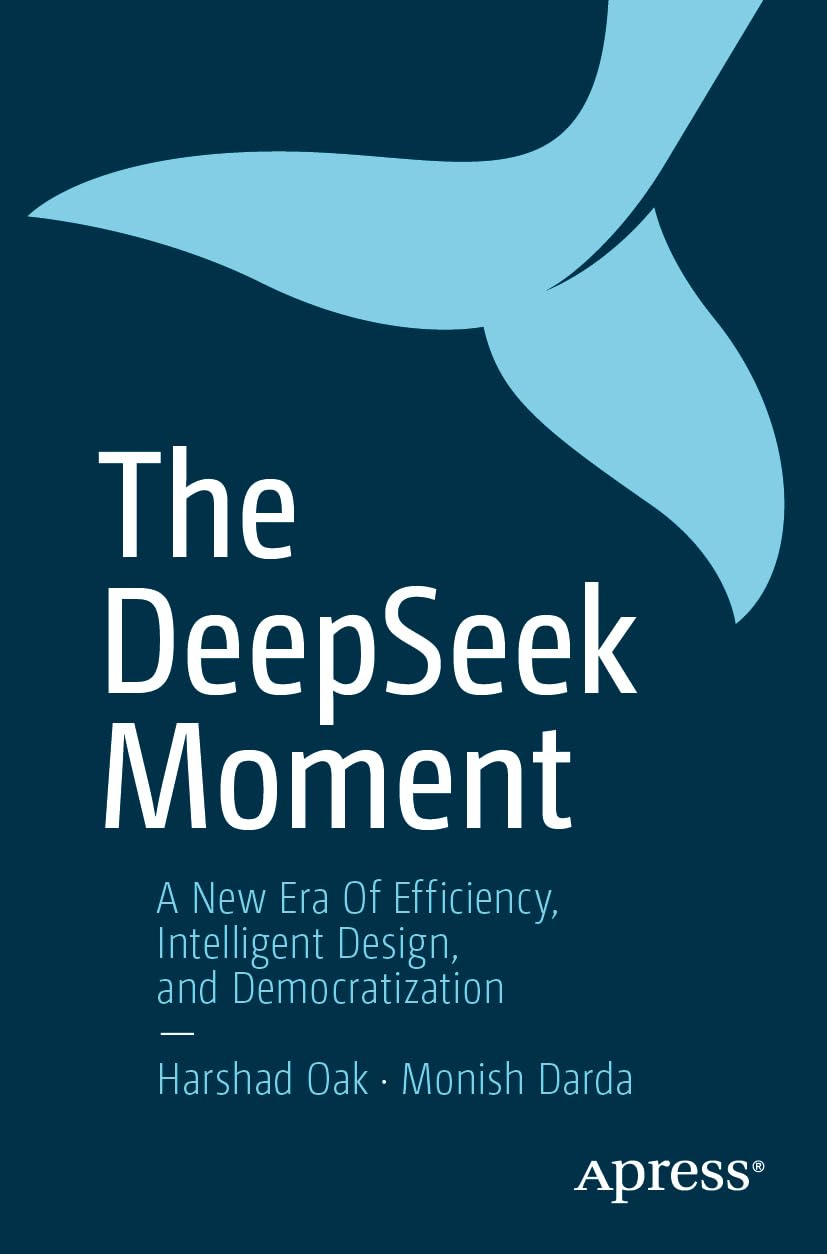
Our guests, Harshad Oak and Monish Darda, are the co-authors of The DeepSeek Moment. Harshad brings experience building software businesses, writing developer books and running technical communities. Monish co-founded Icertis and is now building HumanTronik, exploring how AI can learn the way individual leaders work and make decisions.
Their organising metaphor is an elephant on roller skates: an enterprise moving faster while its leaders work out how much change it can handle. We discuss the people who can make that happen, how Monish has changed his interviews, and why Harshad wants developers to budget for their own tools. Along the way: an awkward calculator, the danger of an AI that always agrees with you, and an 83-year-old building an app by speaking Marathi.
Highlights
A curriculum that stays alive — Monish asks how education can keep pace when learning materials become dated within months. Prompting, communication and executing ideas become part of the curriculum, while fundamentals still matter.
Make the elephant skate — The book’s metaphor gives leaders a practical problem: how to make an enterprise move faster while preparing it for larger changes.
Accountability becomes the job — Harshad argues that producing documents and task lists is becoming easier. Leaders still have to choose tools, anticipate consequences and take responsibility for the result.
Who thrives with AI? — Monish puts communication and persistence ahead of simple distinctions based on age or training. The people who keep returning to a difficult tool are the ones who discover how to make it useful.
Mavericks and custodians — We explore the book’s proposed organisational split between people driving experiments and people keeping the business running. Harshad adds a Marathi word, Sangkamya: someone who does only what they are told.
Fund a few consequential bets — The book proposes a substantial budget, five use cases and three-year plans with an expected return. Monish stresses that the numbers need adapting to the company. Savings from useful work can be reinvested; hundreds of scattered pilots are harder to turn into change.
An interview with AI tools allowed — Monish describes preparing for interviews with Copilot and letting candidates use AI. He evaluates how they communicate, prompt, test and review the resulting code, while continuing to expect a sound grasp of fundamentals.
Design before implementation — In Monish’s persistence-layer example, the engineer works through constraints, scale, requirements and platform choices before asking a coding agent to implement the design.
Budget for your own learning — Harshad explains why allocating money in advance makes learning expenses easier to accept. Monish asks why software engineers, unlike carpenters, so often expect someone else to supply their tools.
Knowledge, output and ownership — Ashish asks what happens to hard-won practical knowledge when sharing it might help automate your own work. Monish follows that question into a hypothetical: five books train a model that produces a sixth. Whose work is it?
A model of how you work — Monish explains HumanTronik’s “human language model” through everyday decisions, delegation, creation, responses and coaching. The aim is a model personalised to an individual, including the context behind their choices.
Scientific temper in the age of agreeable AI — Harshad connects evidence, critical thinking and his work with Andhashraddha Nirmoolan Samiti. An AI’s endorsement can feel authoritative even when it is simply following the direction of a thin prompt.
From Sudoku to building an app — Monish’s 83-year-old mother starts with puzzles, discovers she can speak to AI in Marathi, and builds an app with Codex. Harshad says the surprise among his own friends and family is how little AI is being used.
When should you jump? — The closing career question brings two answers: get comfortable with uncertainty, and take execution seriously. A promising idea and an opening in the market still need someone who can carry the work through.
Quotable quotes
Monish on the gap between impressive technology and changing an enterprise:
When you first, if you remember the moment when you first experienced ChatGPT, go back a few years, right? … It was like mind-blowing. At least I was under the impression that this is going to change the world today, right?
Whereas, you know, it took, we are like, what, four years into this deeply, right? We have spent trillions of dollars all over the world. You know, the best minds in the world are working on this problem. And we are still struggling to get it into the enterprise.
I think the idea of having a technology that is super cool and the idea of actually getting the technology to work in the real world of humans is the difference between an elephant walking in a stately walk and flying. And so you have to be in between. You have to really make your work move faster first before you can change the shape of work.
— Monish Darda
Harshad on what developers now need to understand:
Things that were left to the manager or the product manager or the product owner are now also some things that the developer needs to understand. … If you don’t understand the big picture, you don’t understand why you’re doing what you’re doing.
And that’s where I think a lot of developers struggle because very rarely do you come across a developer who—very rarely is probably harsh—but who really understands why he is doing what he is doing or she is doing and where this is trying to get to. Mostly about checking boxes and completing.
… You might be able to generate code, but if you don’t understand the big picture, things like product management, design thinking, all of things are now integrated to the developer’s job, which earlier were not.
— Harshad Oak
Links & resources
Harshad Oak and Monish Darda, The DeepSeek Moment: A New Era of Efficiency, Intelligent Design, and Democratization — the book that starts the conversation.
HumanTronik — Monish’s company, discussed in the section on human language models.
Harshad’s ChatGPT Told Me I Was Right. That Was the Problem. — the piece behind his discussion of agreeable AI and consequential personal decisions.
a16z, State of Markets II — published on 30 September 2026, providing context for the exchange about paid AI adoption. Its accompanying article puts paying US households at roughly 2% as of April; that is a narrower measure than everyone using AI. The conversation cites approximately 2.5%.


